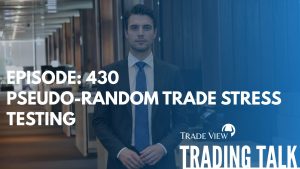
In this week’s episode of Trading Talk, we look at something a little different: building a pseudo-random trade function and using it to stress-test a trading model.
Instead of using randomness to create a trading strategy, the purpose here is to use it as a testing mechanism. By introducing unexpected long, short or mixed trades, traders can examine how their trade management, exits, risk controls and overall model structure behave when conditions do not unfold exactly as expected.
Why Use Pseudo-Random Trades?
Most strategy testing focuses on what happens when a model follows its normal entry rules. But real trading environments are rarely perfect.
Unexpected executions, unusual market behaviour and trades occurring outside normal model conditions can expose weaknesses that may not appear during standard testing.
A pseudo-random trade function provides another way to challenge a model and test whether the trade management structure remains stable when unexpected trades are introduced.
Building Random Values from Market Data
In Episode 430, we demonstrate how values derived from price data can be transformed into a pseudo-random input inside the platform.
Those values can then be used to generate different trading actions for testing.
- Long trades
- Short trades
- Mixed long and short sequences
- Different trade combinations for stress-testing
The objective is not to predict market direction. Instead, randomised trade sequences provide a controlled way to test how the rest of the trading system responds.
Monte Carlo-Style Thinking for Algo Testing
The concept shares similarities with Monte Carlo-style testing, where multiple possible sequences or scenarios can be examined rather than relying on one historical outcome.
For systematic traders, this type of testing can help determine whether results depend heavily on a particular sequence of trades and identify areas of the model that may require further investigation.
Stress-Testing Trade Management
One of the most useful applications of pseudo-random trading is testing the parts of a model that operate after a position has been opened.
- Stop-loss behaviour
- Profit-taking rules
- Position management
- Maximum exposure controls
- Long and short trade handling
- Exit conditions
- Portfolio-level safeguards
A strategy may have strong entry logic, but its management framework still needs to deal with unexpected situations. Stress-testing can help expose those situations.
Building and Testing in Trade View X
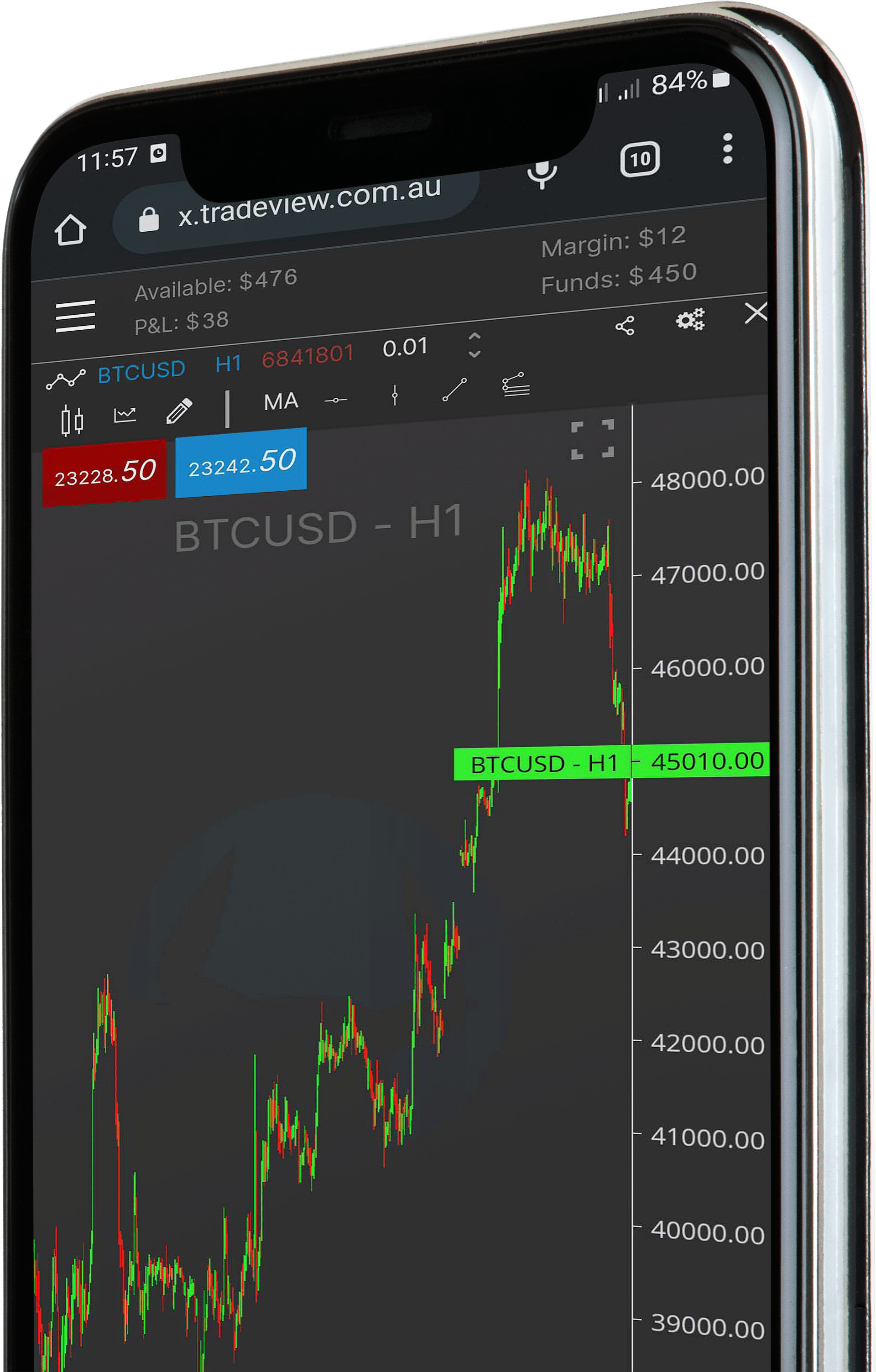
The function demonstrated in this episode is built inside Trade View X, where traders can create, test and refine systematic trading rules within the platform.
Key Points
- Build a pseudo-random trade function inside the platform
- Generate pseudo-random values using market price data
- Create long, short and mixed trade sequences
- Apply Monte Carlo-style thinking to strategy testing
- Stress-test trade management and risk controls
- Examine how models respond to unexpected trades
- Look beyond entry signals when evaluating model robustness
Related Tools & Resources
Continue Exploring
Trading strategy testing is not only about finding entries that worked historically. It is also about understanding how a model behaves when conditions move outside the expected sequence.
Episode 430 provides another practical method for examining the robustness of systematic trading models.